
Savouring Old Apple Varieties
in local collections and international research
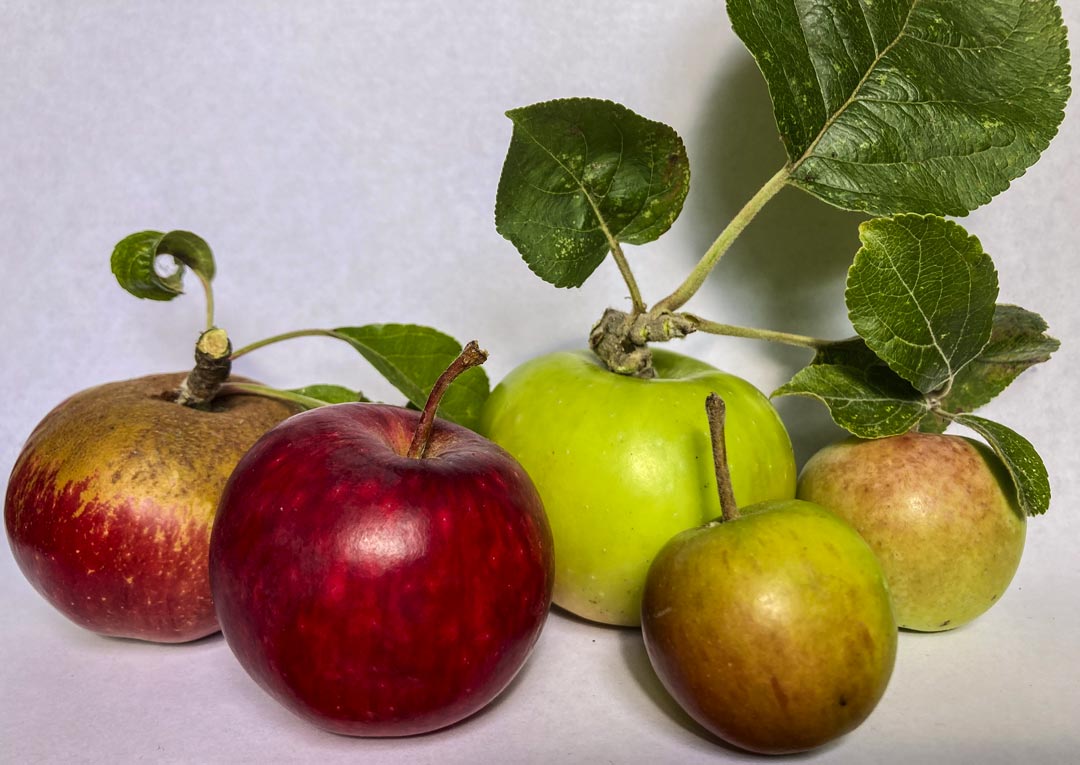
Working with nature to produce new commercial apple varieties takes lots of time and dedicated people. Apples & People has retold stories of how new varieties have been developed around the world: The long process to launch the world’s Apple No 1 Fuji in Japan which spanned the Second World War ; Pink Lady in Western Australia – the product of 108,000 seedling crosses overseen by the late John Cripps ; a series of varieties bred in New Zealand most recently Allan White’s Jazz ™ and Envy ™ and the work of Monsieur Pierre-Michel Legrand in France who propagated, amongst other varieties, the Michelin cider apple.
As much time and dedication is now being undertaken to find, propagate, care for, and record apple varieties that are no longer commercially viable or had local resonance, with heritage collections worldwide aiming to preserve the world’s richly diverse population of apple varieties.

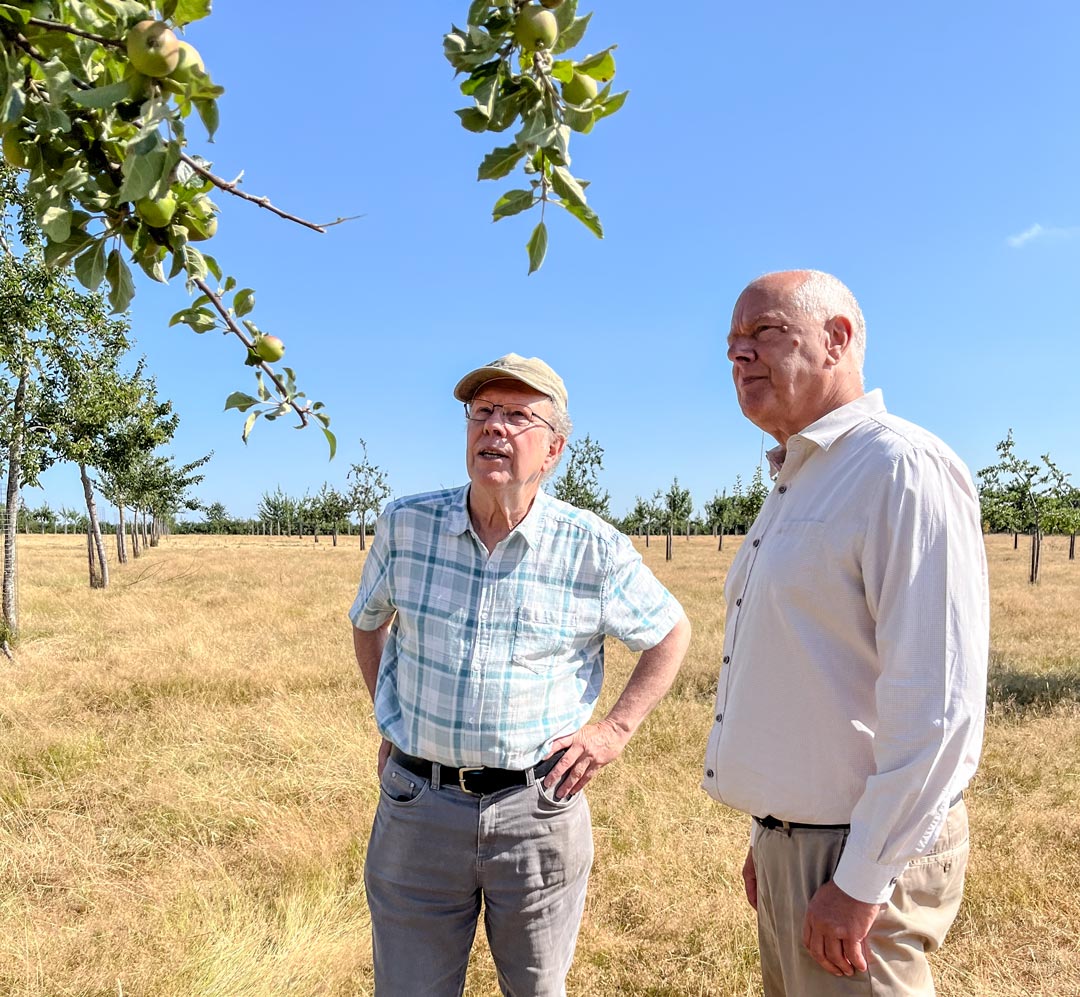
Hereford’s Museum of Cider, the largest such museum anywhere in the world, has in recent years taken ownership of several orchards in Breinton, just west of Hereford city. Amongst these orchards is a large collection of heritage cider apple trees built up over the last 20 years. The collection was the brainchild of the late Gillian Bulmer who realised the need for a gene bank for many of the varieties that were once valued but are now largely ignored because they do not fit with current consumer tastes or the limitations of modern orcharding and cidermaking practice.
Varieties have been collected and grafted from trees across Herefordshire, the West Midlands and South-West. The work to research and propagate the collection is undertaken by the Museum of Cider’s volunteer ‘Conservator of Fruit’ John Teiser, with long-time colleagues Rob Uren and Gillian’s nephew Tim Bulmer maintaining the orchards. All varieties are being genetically tested to help confirm their identity.
Now, the collection has been awarded National Plant Collection® status for Malus Cider apple trees by UK conservation organisation Plant Heritage, endorsing its importance in preserving heritage cider apple varieties and as a diverse resource to help ensure that cider fruit can withstand future threats, including from climate change.
Dr Tim Upson, Chair of the Plants Collections Committee, Plant Heritage and Director of Gardens and Horticulture at the RHS says:
“The diversity of apples in the UK is unsurpassed with wonderful regional varieties strongly linked to local culture and history. Conserving this unique plant diversity through well-managed and curated collections is vital to ensure this heritage is available to benefit future generations. This collection of cider apple trees, now a fully approved Plant Heritage National Plant Collection®, makes a key and important contribution to conserving the UK’s cultivated plants and apples in particular.”
Dr Matt Ordidge, scientific curator of the UK’s National Fruit Collection adds:
“The collection at the Museum of Cider now registered with Plant Heritage is a valuable resource, protecting diversity for the future. It contains material that is currently not backed up in the National Fruit Collection and has been carefully curated over recent years by John Teiser.”
Dr David Marshall, Chairman of the Trustees of the Museum of Cider says “Receiving National Plant Collection® status is thanks to many years of care by John Teiser and the Museum of Cider’s orchard team, led by trustee Chris Fairs, and the vision of Gillian Bulmer. It’s a major achievement for Herefordshire and reflects its important cider heritage.”
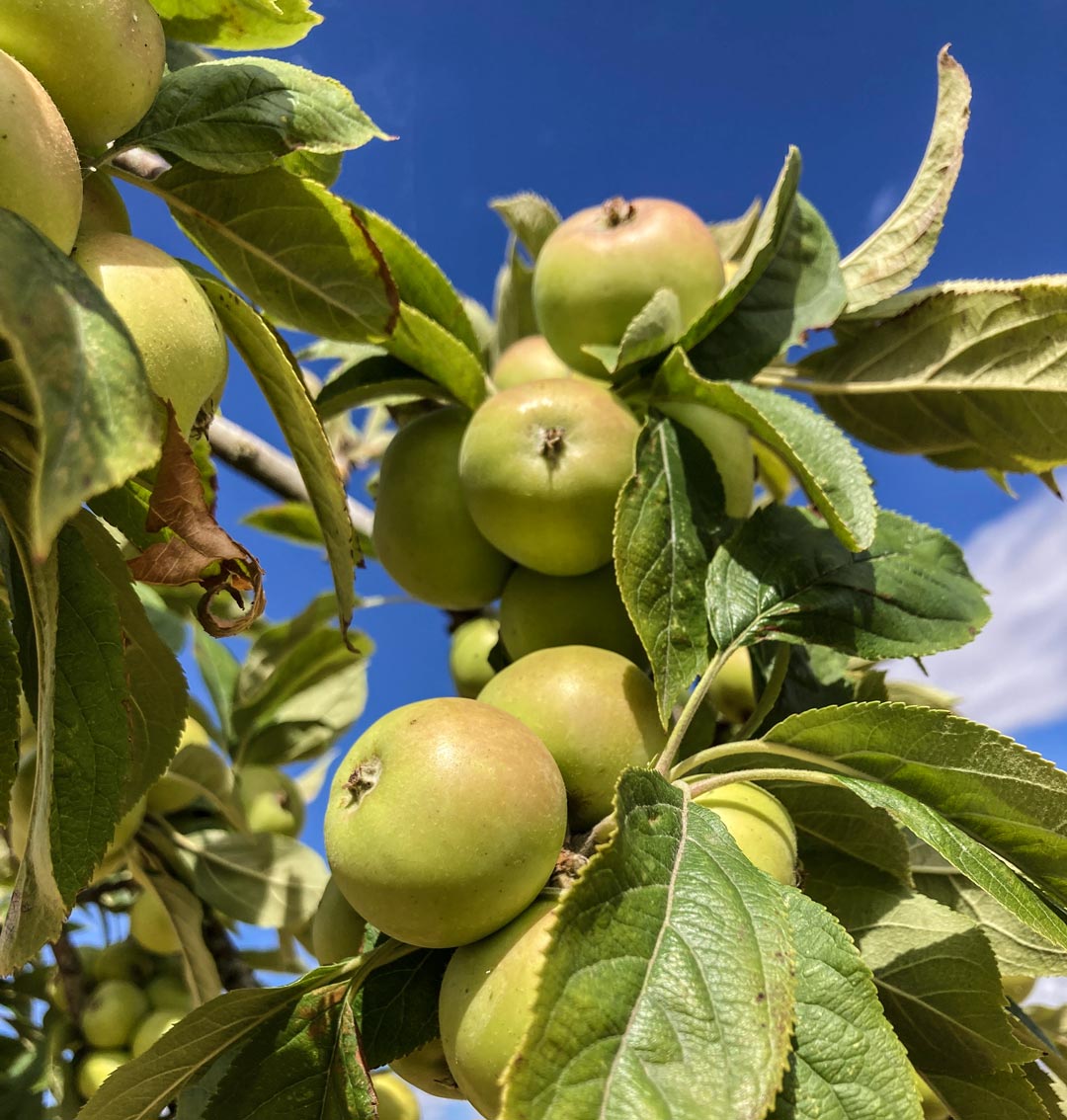
The collection consists of three trees each of 179 varieties of cider apple at the last count. John Teiser and colleagues continue to extend the collection, searching out overlooked old cider apple trees in orchards and gardens in the Herefordshire area.
Such National Collections are recognised internationally as contributing to plant conservation and biodiversity.
A large-scale international project now aims to unpick apple pedigree by genotypically characterising the world’s economically, historically, and culturally important apple cultivars using SNP array data. Leaf samples from public and private heritage apple collections across the world are being genetically tested, and their profiles added to the project’s international database.
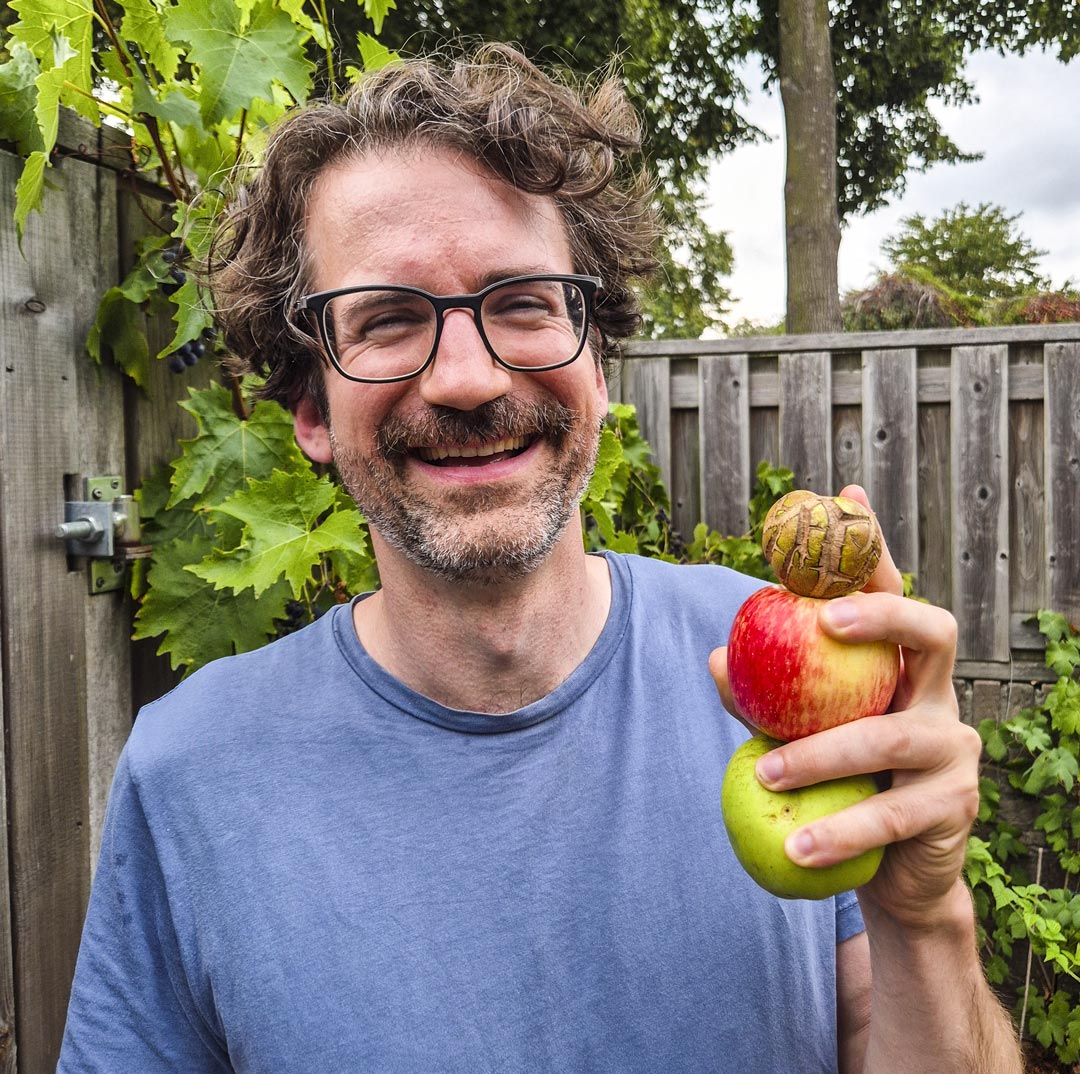
Dr Nick Howard, an American apple breeder based in the Netherlands, is leading part of the project that combines and processes the array SNP data.
“My hope is that the results of this work will help to inform collections and pomologists about genotypic duplicates, true-to-typeness, special apples that belong in collections or deserve more rigorous/serious preservation, and to uncover previously unknown historical details about apple varieties. The project will of course also help scientists and breeders like myself with their research.
The dataset for the project contains genotypic data on over 10,000 accessions from all over the world. Although it contains many cider apples from various regions, this is only a fraction of historic UK cider apples, and we hope to extend this by including data from more heritage collections. This will help resolve the identities and histories of UK cider apples. For instance, we have data for two different and distinct profiles for ‘Yarlington Mill’. Both are half-siblings sharing the same unknown parent. Additional data might resolve which is the real deal and which is maybe some other cider cultivar that was mistakenly given the wrong name. Perhaps we will find its unknown parent somewhere…. Or, failing that, perhaps there are more offspring that could help better reconstruct the history of the material.”

Already heritage collections have proved to be real treasure troves. For example, in the Netherlands, the sweet apple Herfst Bloem Soete wasn’t in the national collection, but a single tree existed in a private collection, the Pomologische Vereniging Noord-Holland’s orchard, and this was genetically tested. This apple features in Knoop’s Pomologia (1758) where Knoop describes it as having “beautiful red blushing” and being “one of the best sweet apples” at that time.
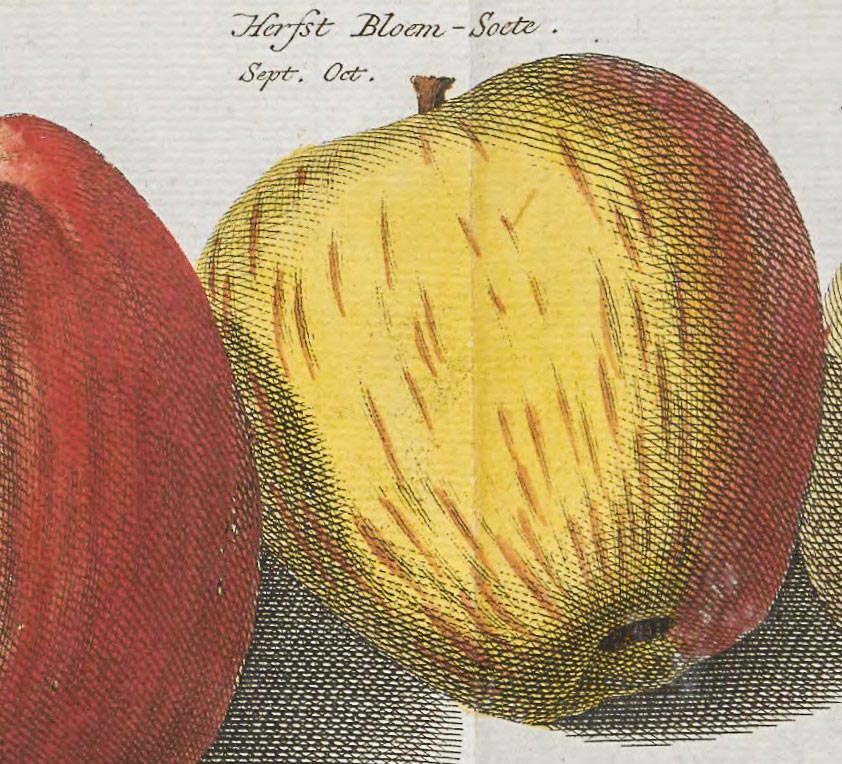
SNP genetic research showed Herfst Bloem Soete (which translates as “Sweet Flower of Autumn”) to be a major ancestor of many later traditional Dutch apple cultivars, although unknown outside the Netherlands. It is therefore one of the most important historical apples in the Netherlands and has since been repropagated for Centrum voor Genetische Bronnen Nederland, the Dutch national collection of genetic resources. The wider Dutch findings were published in 2024.
Nick and collaborators aim to publish full project results next year and hope that this will stimulate further interest in the vast diversity of apples, their provenance, and interrelationships.
Without the underpinning work to preserve fruit collections like at the Museum of Cider, which is work often undertaken by passionate volunteers, the world would lose the rich variety of apples which humanity has long nurtured.
The End Of The Road
The Apples & People website will cease at the end of 2026. Please take a moment over these next few months to look again at the stories, articles and images on the website and wonder at the extraordinary multi-faceted relationship between people and apples.
Sources:
- Johann Hermann Knoop (1763) Pomologia Second Edition (Table II)
- Larsen, B., van Dooijeweert, W., Durel, C. E., Denancé, C., Rutten, M., & Howard, N. P. (2024). SNP genotyping Dutch heritage apple cultivars allows for germplasm characterization, curation, and pedigree reconstruction using genotypic data from multiple collection sites across the world. Tree Genetics and Genomes, 20(4), Article 21.

 Looking beyond Skin through Apples by Rocky Sol Selvaraj
 Barnaby Barford - Land of Hope and Glory Copyright © Barnaby Barford 2021